TrailPack

Field Guide 01
Camp Kitchen & Comfort

Camp Kitchen Guide

Cook Better Outside

Build a campsite kitchen that is organized, efficient, comfortable, and ready for everything from the first morning coffee to a full evening meal.
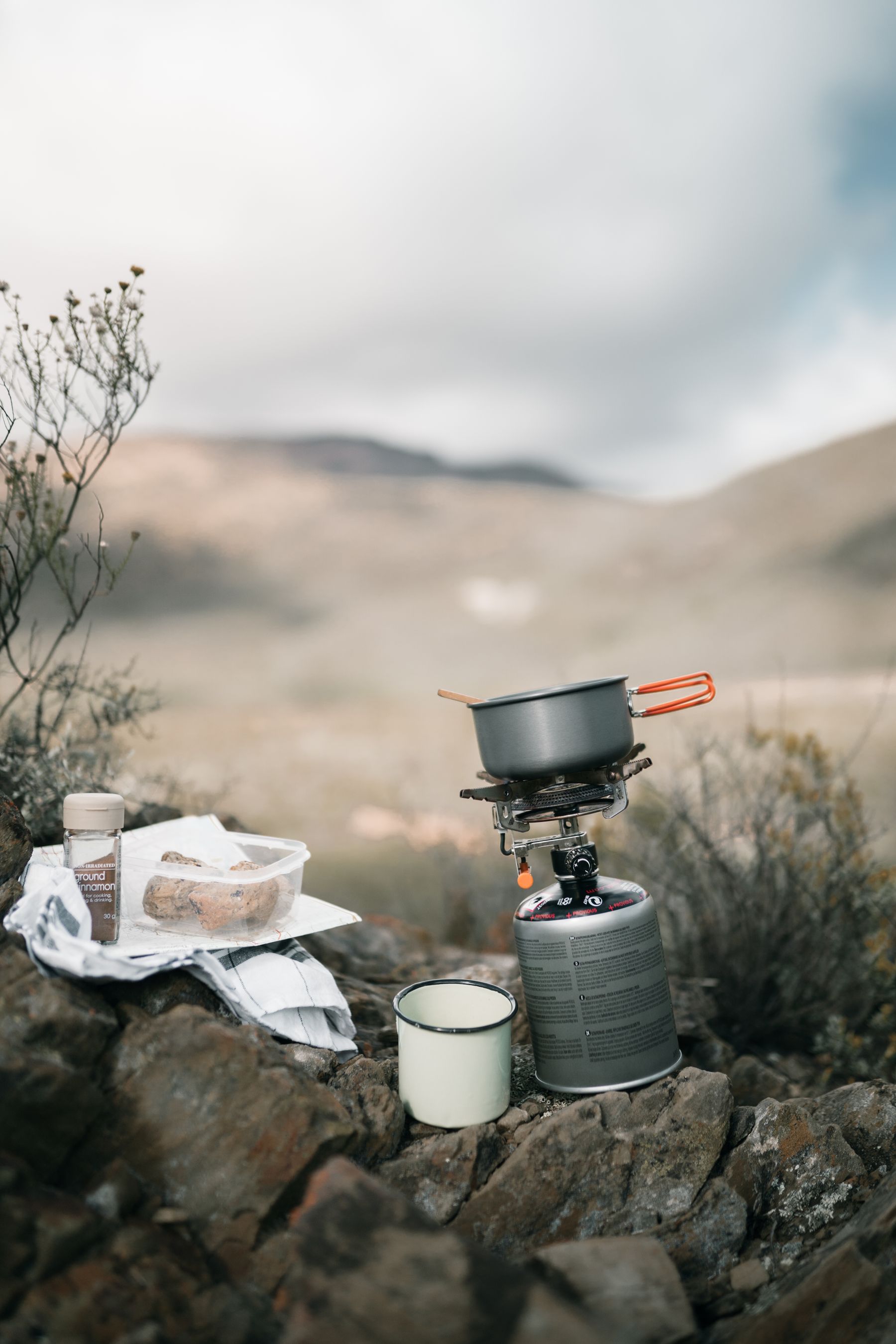
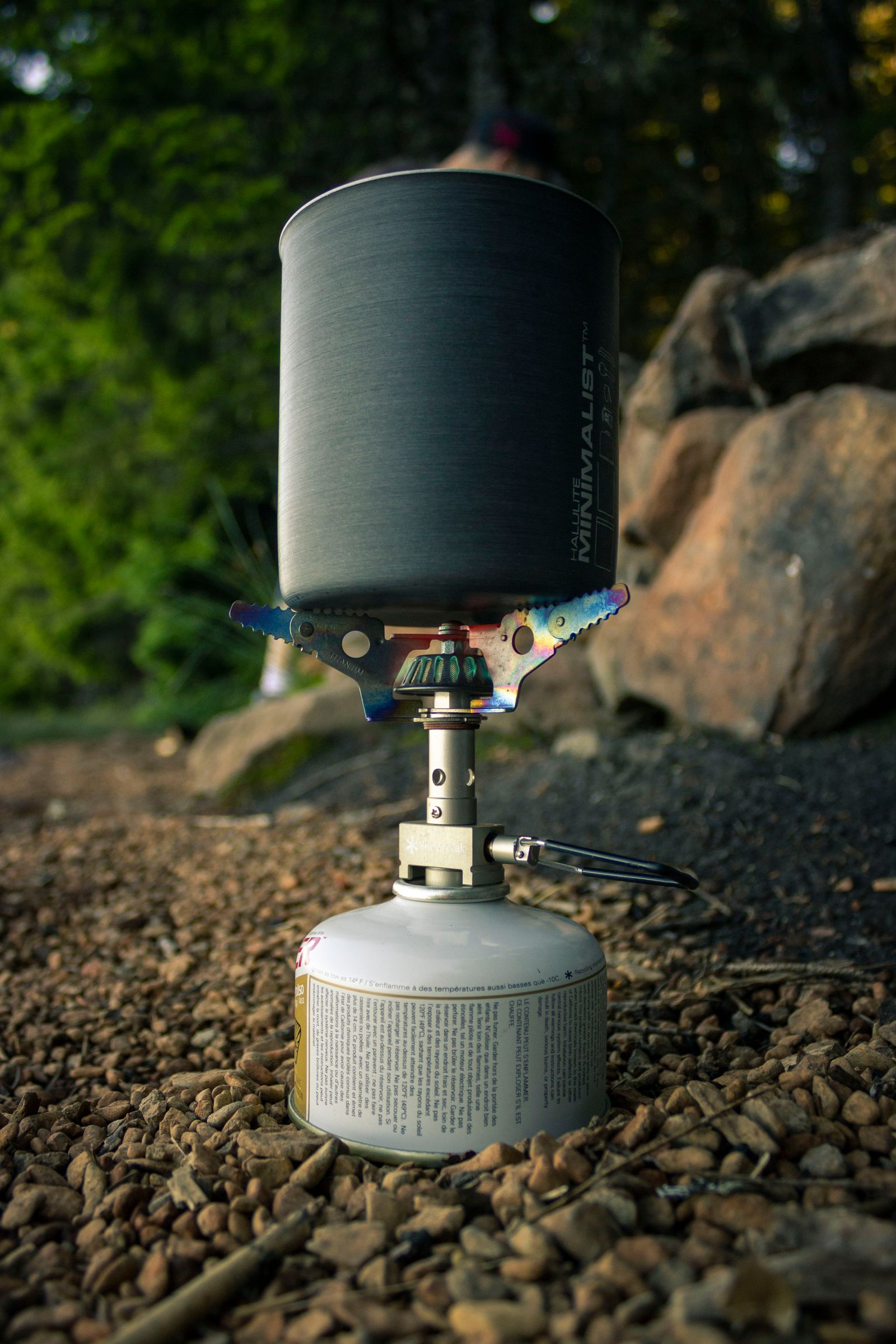
Portable camping stove and cookware arranged outdoors
A stable cooking surface creates a calmer campsite. TrailPack Field Notes

The Starting Point

A Kitchen With a Clear Flow

A strong camp kitchen is less about bringing more equipment and more about assigning every task a reliable place. Separate heat, preparation, water, food, and cleanup so the campsite remains easy to navigate from arrival to pack-down.

01

Create Zones

Keep your stove, cutting area, food storage, and wash station distinct. Clear zones reduce clutter and help prevent raw ingredients, cookware, and clean dishes from mixing.

02

Pack by Task

Group items according to how they are used. A cooking kit, coffee kit, serving kit, and cleaning kit are faster to deploy than one large container filled with unrelated gear.

03

Protect the Routine

Choose durable tools, stable surfaces, and simple meals. The best setup works in changing weather and remains manageable when daylight, energy, or space is limited.

The Core System

Four Essentials, One Working Kitchen

Start with the equipment that supports every meal. Once these four foundations are dependable, cookware, ingredients, and comfort items become easier to select.
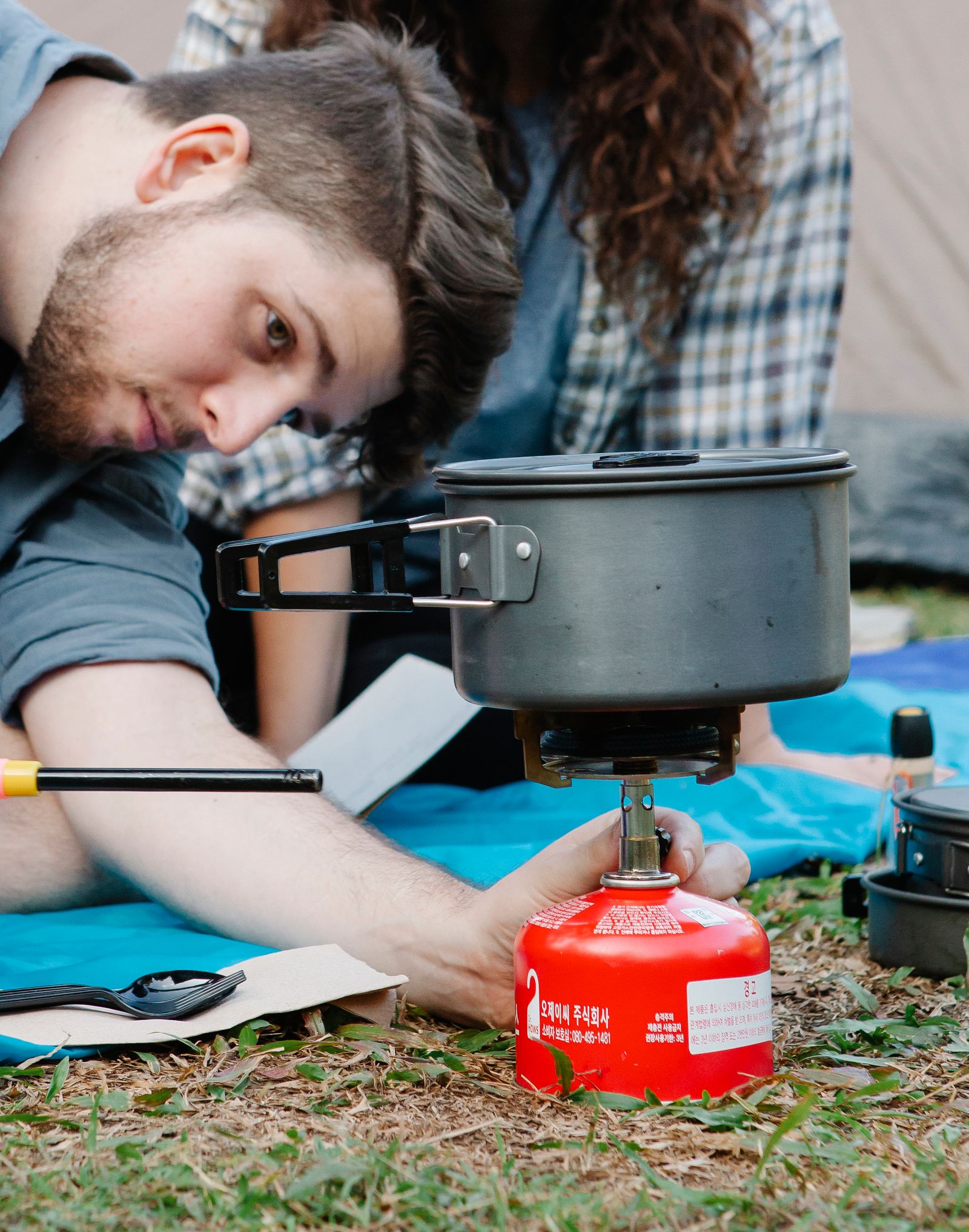
Camper preparing food with a portable stove in nature
Foundation 01 Heat & Cooking

A Stable Heat Source

Match the stove to your group size and cooking style. A compact burner supports simple meals, while a wider two-burner setup gives you more control for shared breakfasts, side dishes, and longer stays.
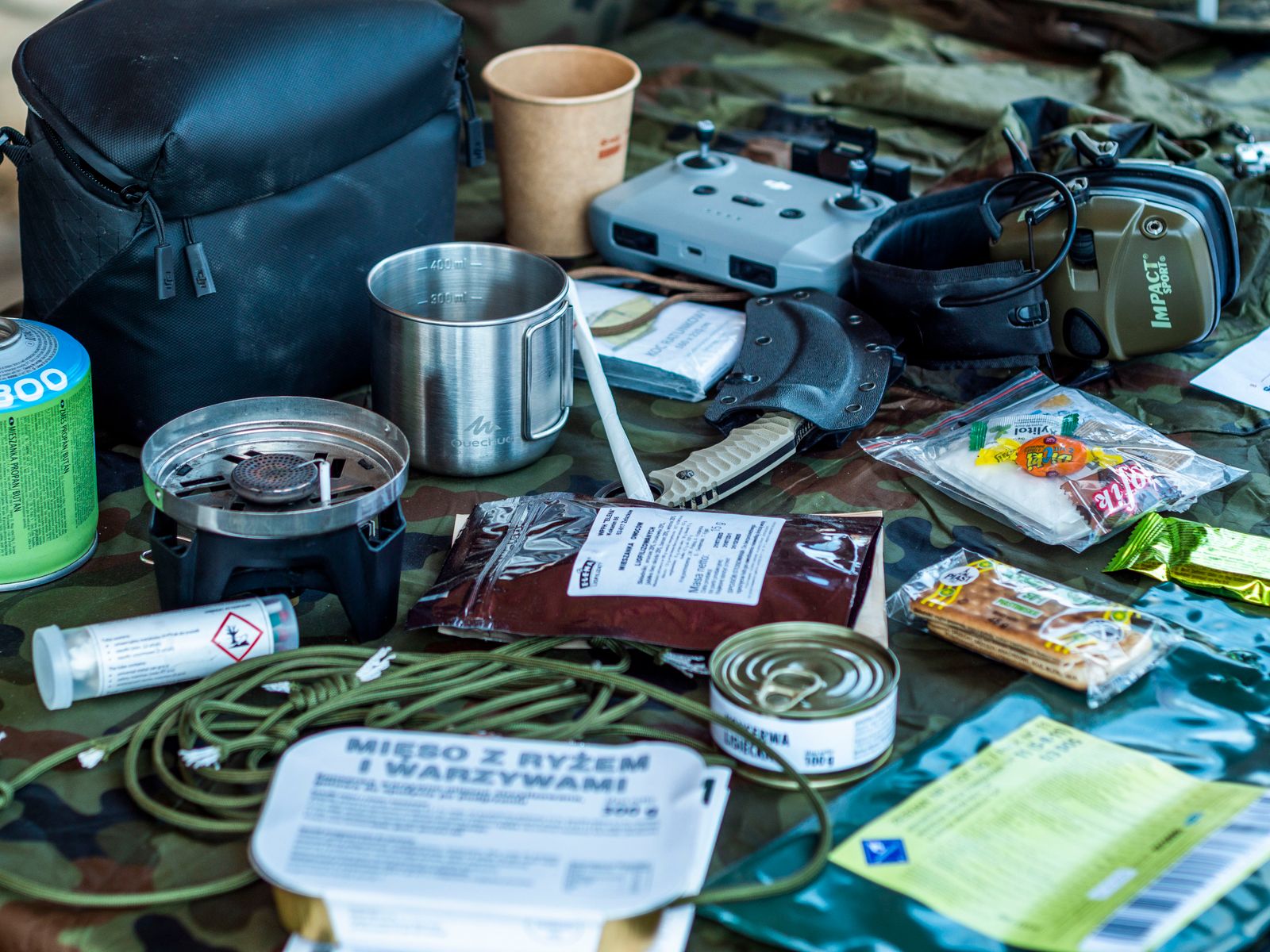
Organized collection of camping cookware and outdoor equipment
Foundation 02 Tools & Cookware

A Compact Cooking Kit

Build around one versatile pot, one pan, a sharp knife, a durable cutting board, a serving utensil, and heat-safe grips. Multipurpose pieces keep the kit lighter and easier to organize.
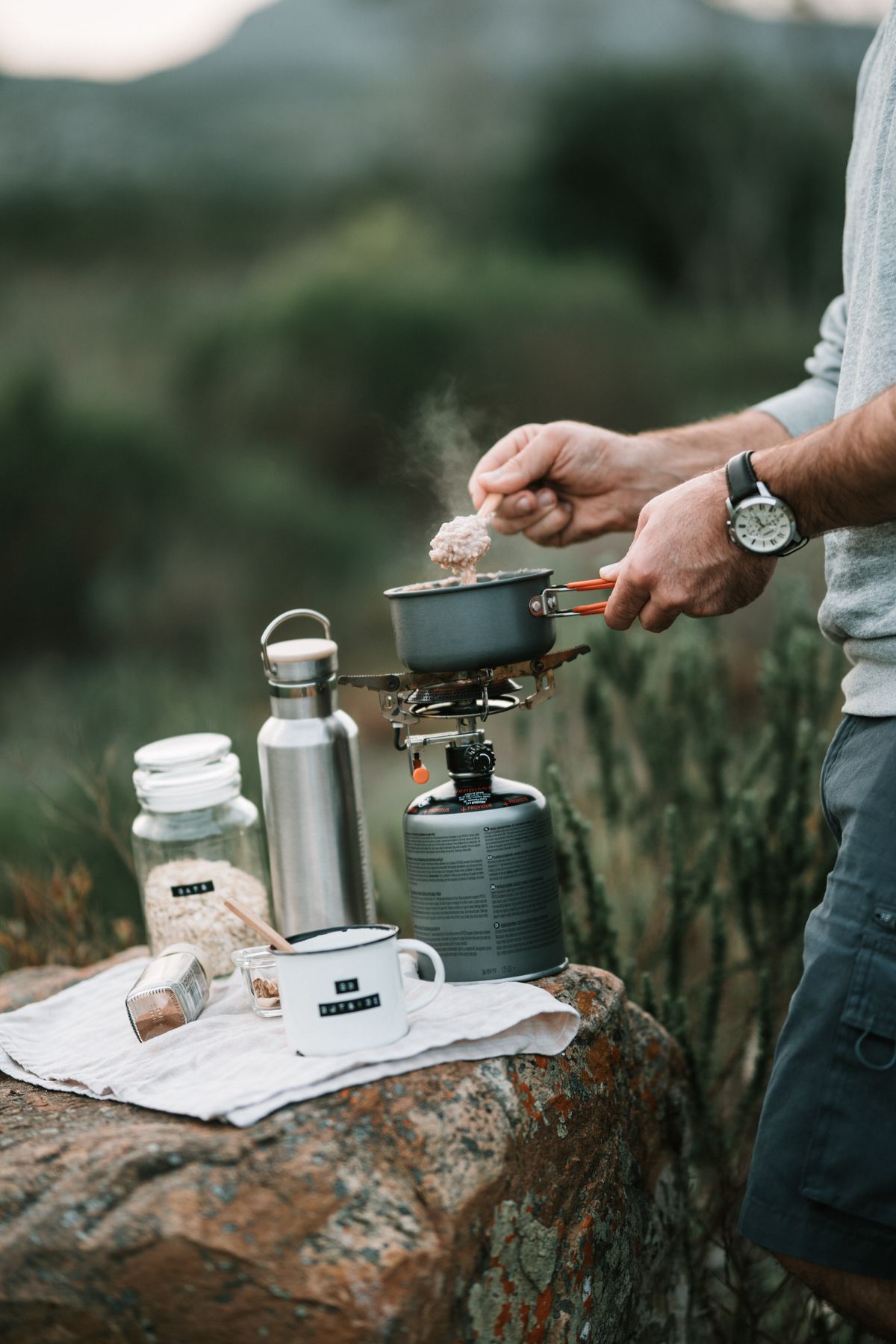
Outdoor meal preparation with compact camping equipment
Foundation 03 Preparation

Clean Prep Space

Reserve a level surface for cutting, seasoning, and serving. A separate prep zone keeps food away from fuel, hot cookware, and crowded picnic tables.
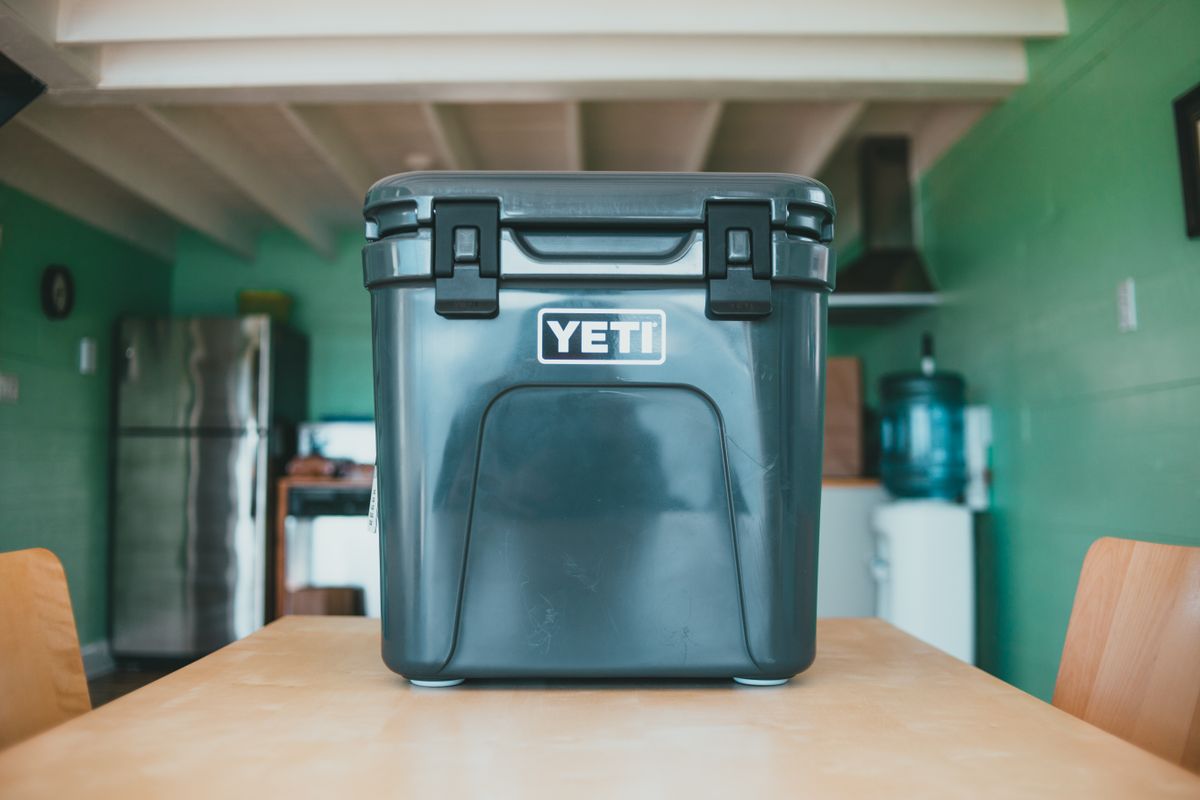
Compact camping cooler used for organized food storage
Foundation 04 Cold Storage

Reliable Food Storage

Use a cooler or insulated container that fits the trip length. Separate frequently used drinks from temperature-sensitive food whenever space allows.

Setup Guide

Build Your Camp Kitchen

Assemble the kitchen in the order you will use it. A deliberate sequence makes setup quicker and prevents essential equipment from becoming buried under chairs, tents, and personal gear.
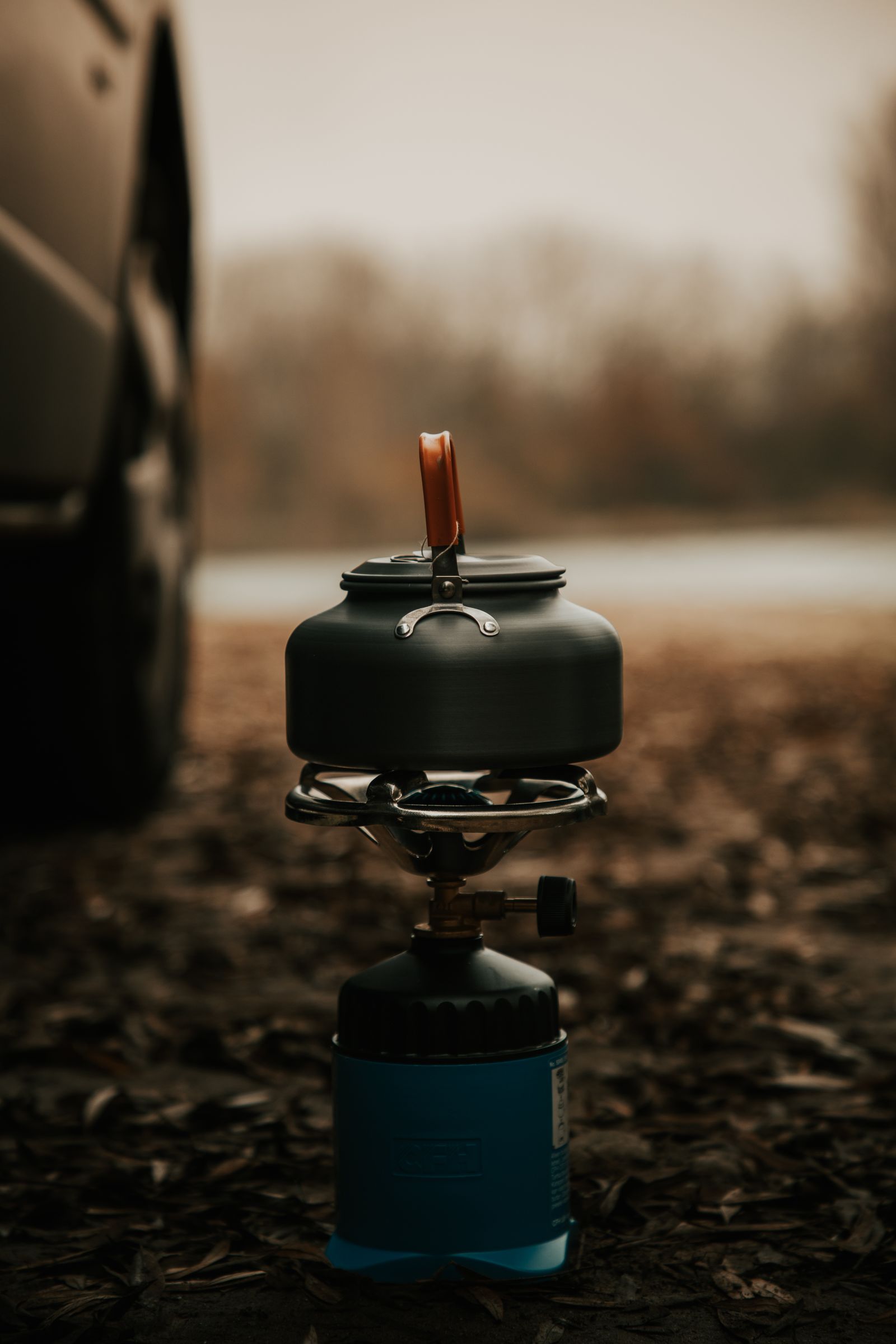
Portable camping stove positioned on a stable outdoor cooking surface
01

Place the Heat Zone

Select a firm, level surface with open space above and around the stove. Keep the cooking area away from tent walls, dry grass, overhanging branches, and high-traffic paths.
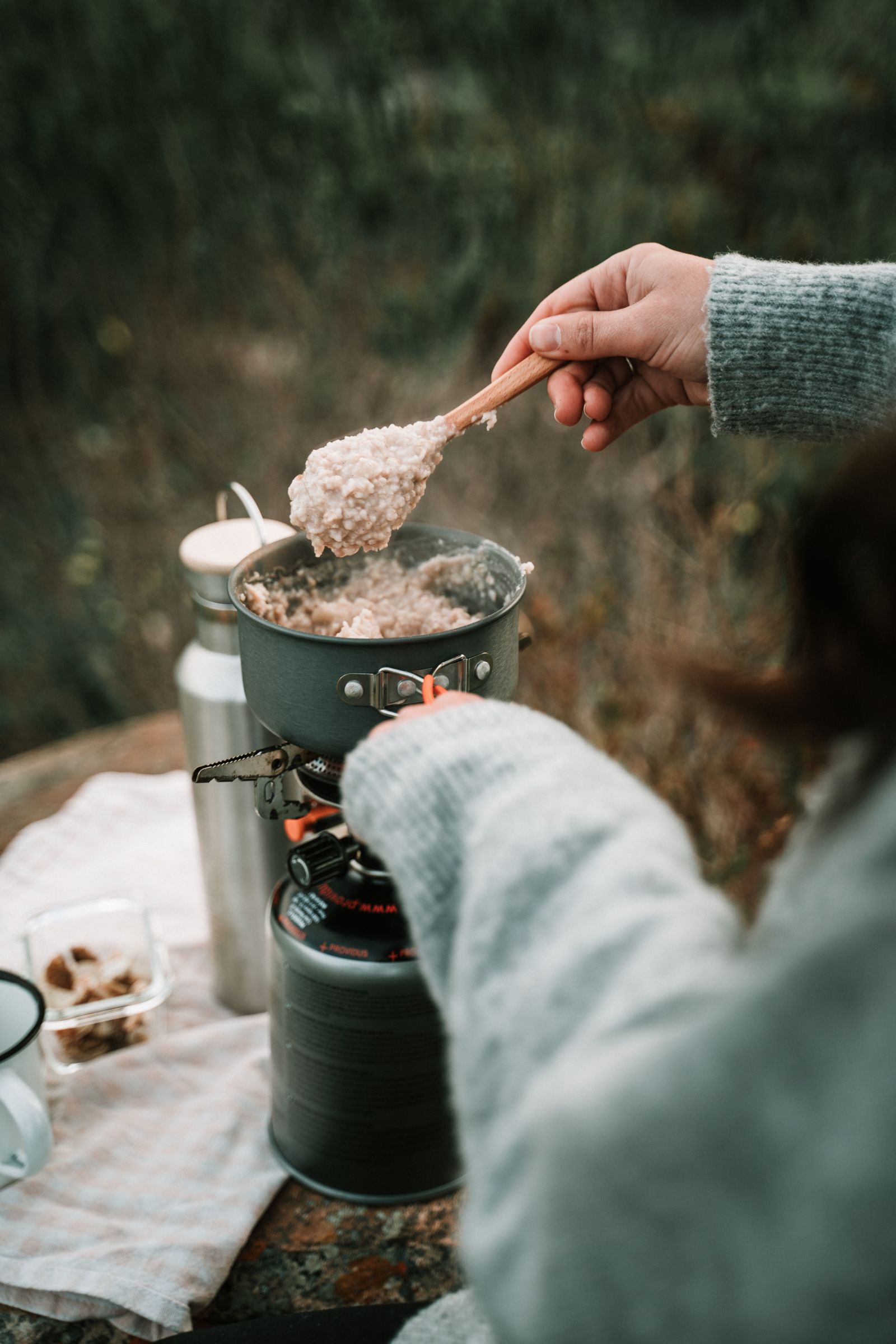
  • ACheck that the stove cannot rock, tilt, or slide before connecting fuel.
  • BKeep fuel upright and outside the immediate cooking workspace.
  • CPosition pot handles inward where they cannot be knocked or caught.
Person preparing a simple meal with camping cookware
02

Open the Prep Zone

Set up a second surface beside the stove rather than directly in front of it. This gives the cook room to move while another person can prepare ingredients without reaching across heat.
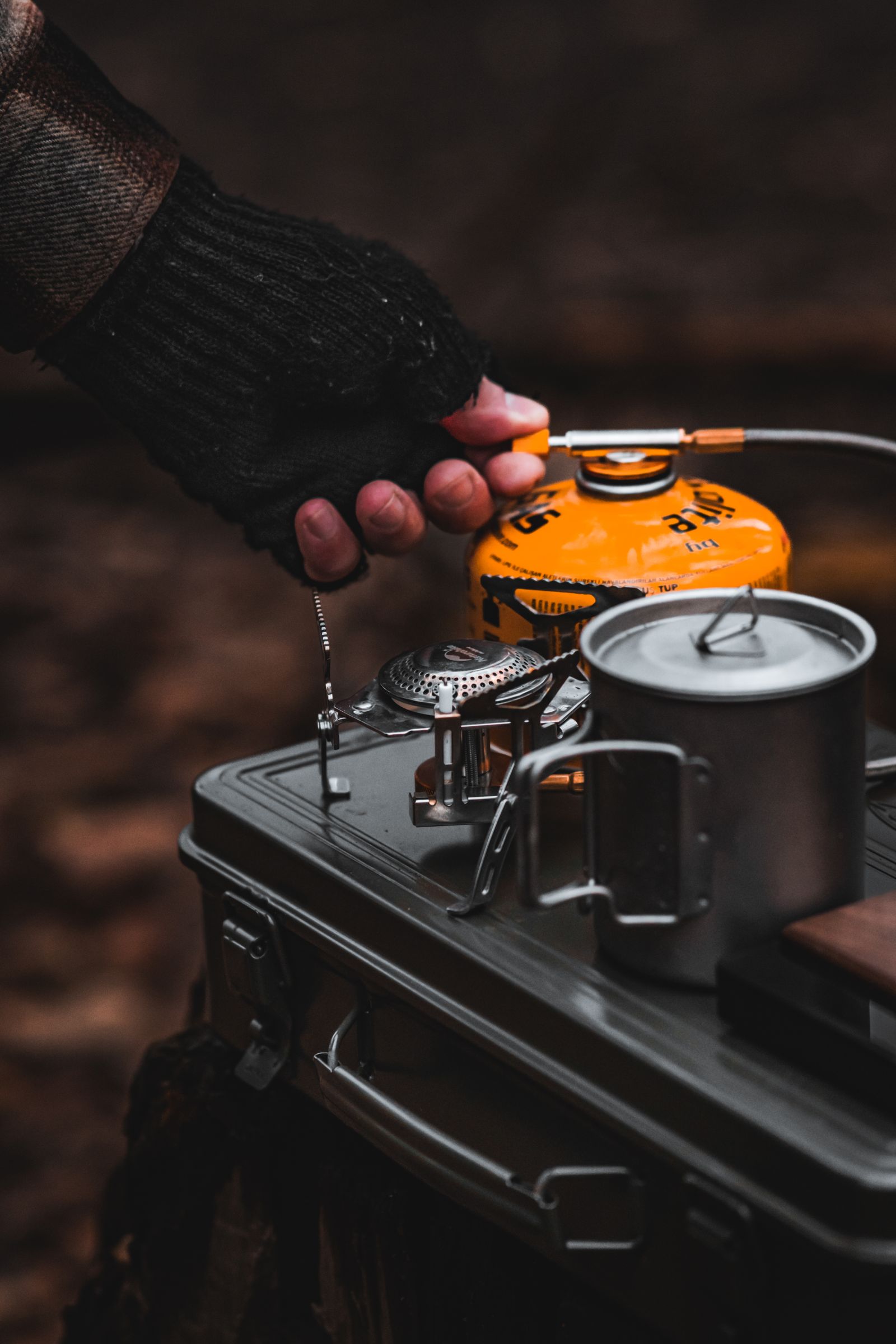
  • AUse one board for produce and another surface for raw proteins when needed.
  • BKeep the knife, seasoning, oil, and serving tools within one arm's reach.
  • CPlace a small waste container beside the prep area before cooking begins.
Camping mug and outdoor kitchen equipment arranged at a campsite
03

Separate Drinking Water

Keep drinking water clearly separate from washing water. Store both where they remain shaded, stable, and easy to reach without crossing the active cooking space.
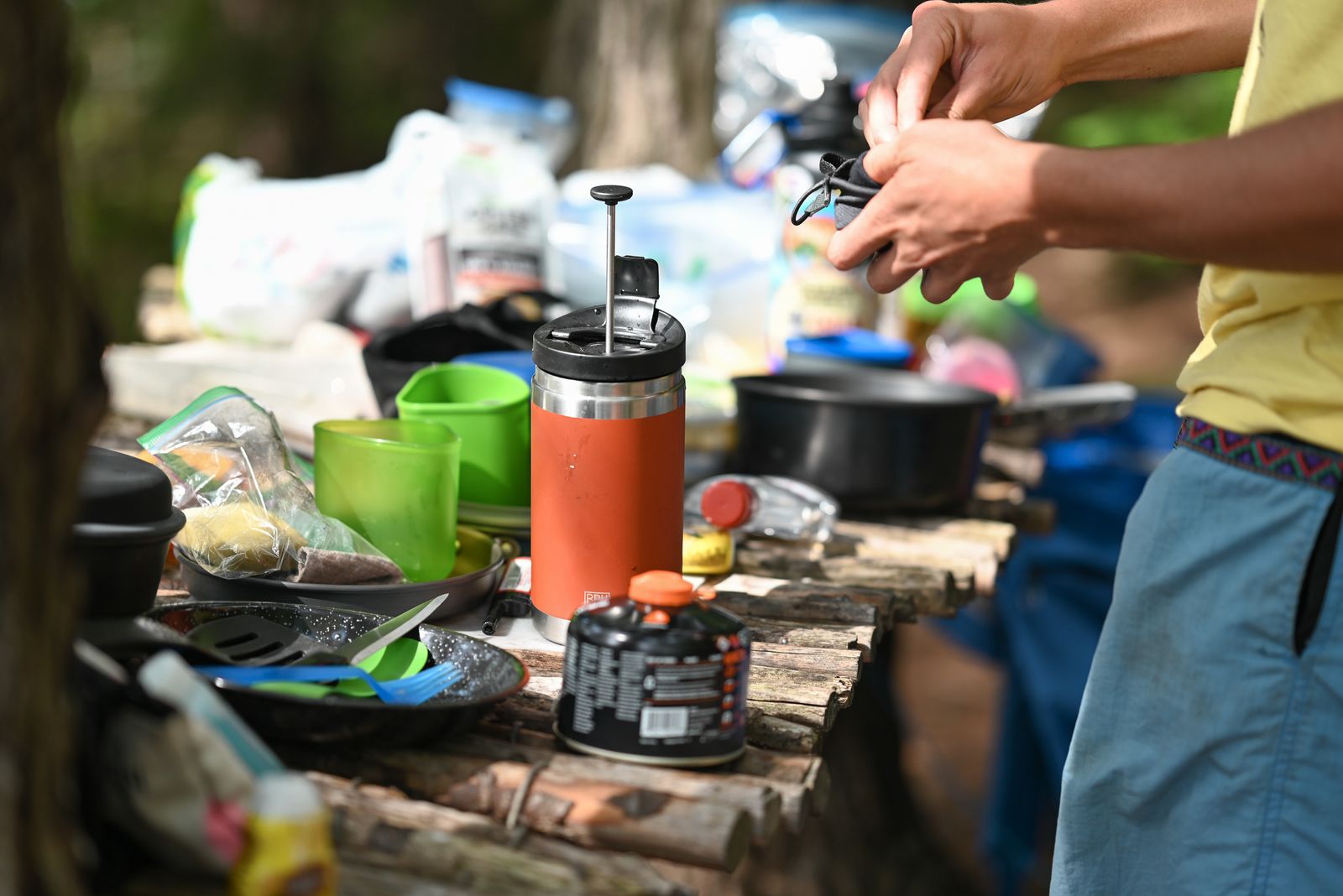
  • ALabel containers or use visibly different vessels for drinking and washing.
  • BUse a controlled spout to reduce spills and wasted water.
  • CRefill bottles before darkness or changing weather complicates the task.
Organized open-air camping kitchen with cookware and coffee equipment
04

Control the Storage Zone

Store dry food, cookware, and cleaning supplies in separate containers. Place the most frequently used items near the top so the kitchen remains orderly throughout the trip.
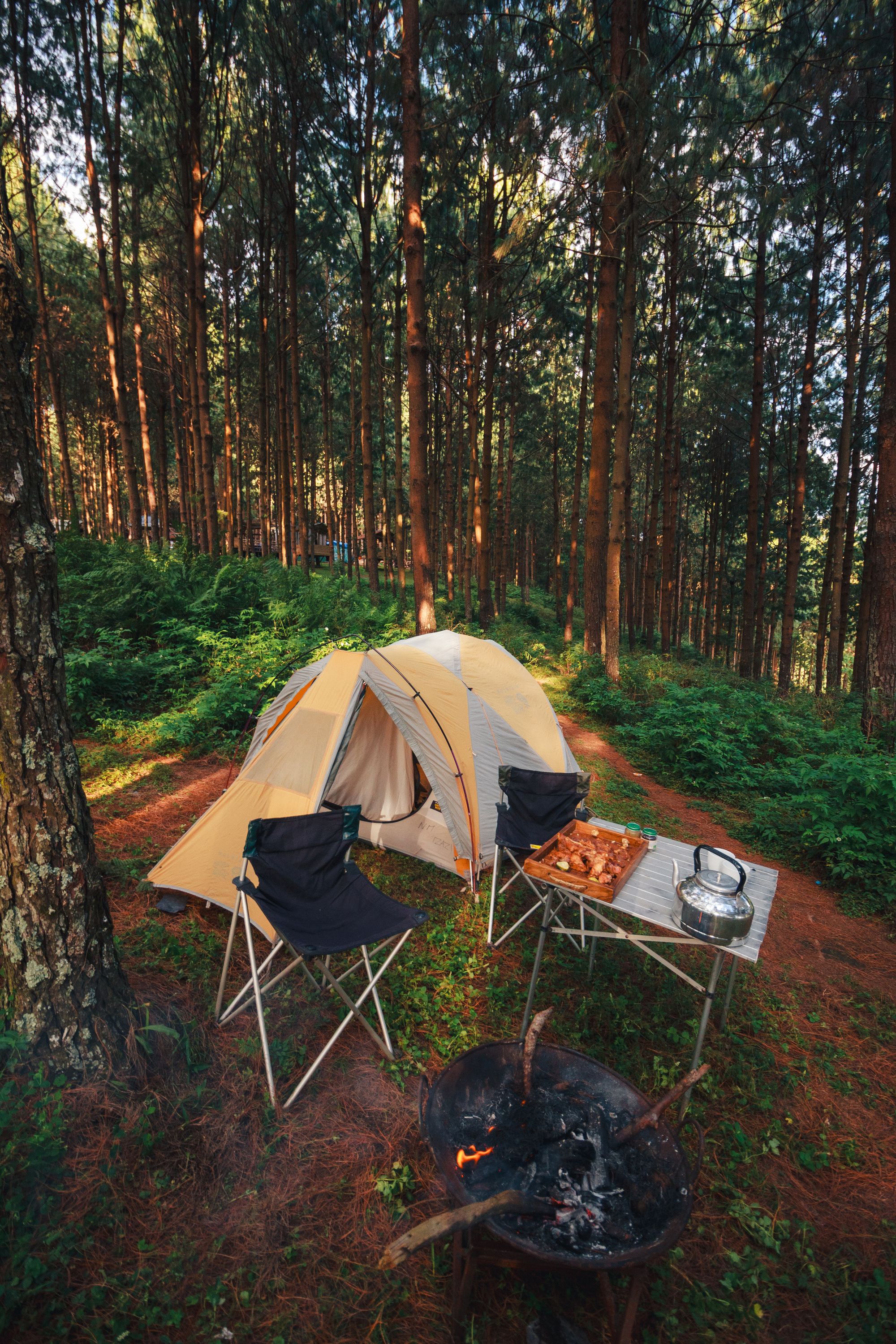
  • AUse secure lids to protect supplies from weather, dust, and wildlife.
  • BGroup breakfast, dinner, and beverage ingredients into smaller bags.
  • CReturn every tool to the same container after each meal.
Complete forest campsite with tent, table, cooking equipment, and campfire

Camp Safety

Make Safety Part of the Layout

Safe cooking begins before the flame is lit. Consider wind, fuel placement, lighting, foot traffic, children, pets, and nearby vegetation when choosing the kitchen location.

Cook Outdoors

Never use fuel-burning stoves inside a tent, vehicle, or enclosed shelter.

Read the Wind

Use an appropriate windscreen without enclosing or overheating the fuel canister.

Protect the Path

Keep hot cookware, fuel lines, and open flames away from walking routes.

Keep Water Ready

Maintain a suitable way to extinguish heat or flame within immediate reach.

Stay Present

Never leave an active stove or fire unattended, even for a brief moment.

Cool Before Packing

Allow stoves, pans, grills, and fuel connections to cool before storage.

Meal Planning

Plan for Energy, Not Complexity

Choose meals according to arrival time, available daylight, weather, and group size. Prepare ingredients at home whenever possible so your campsite cooking remains relaxed and efficient.
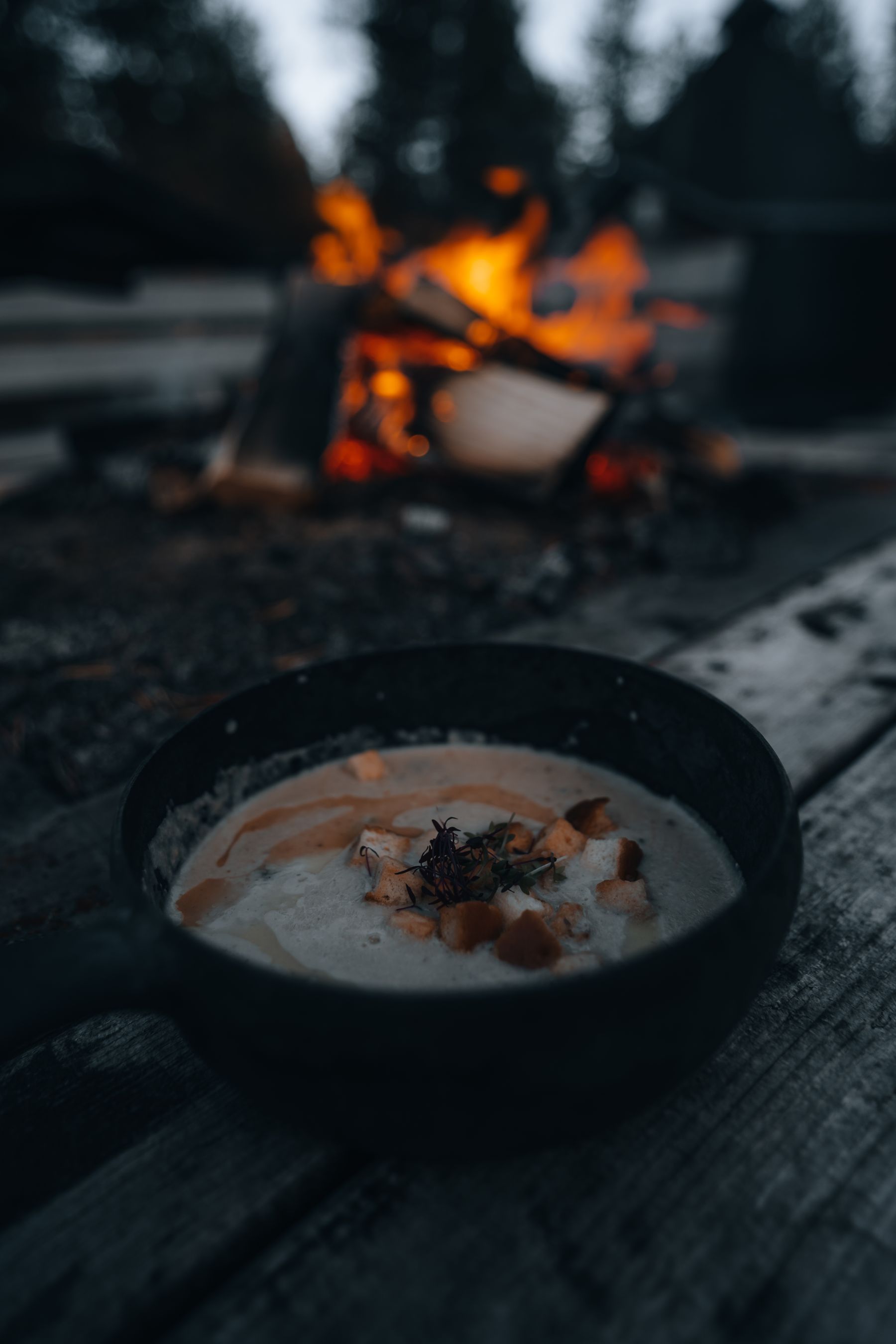
Warm prepared camping meal served outdoors
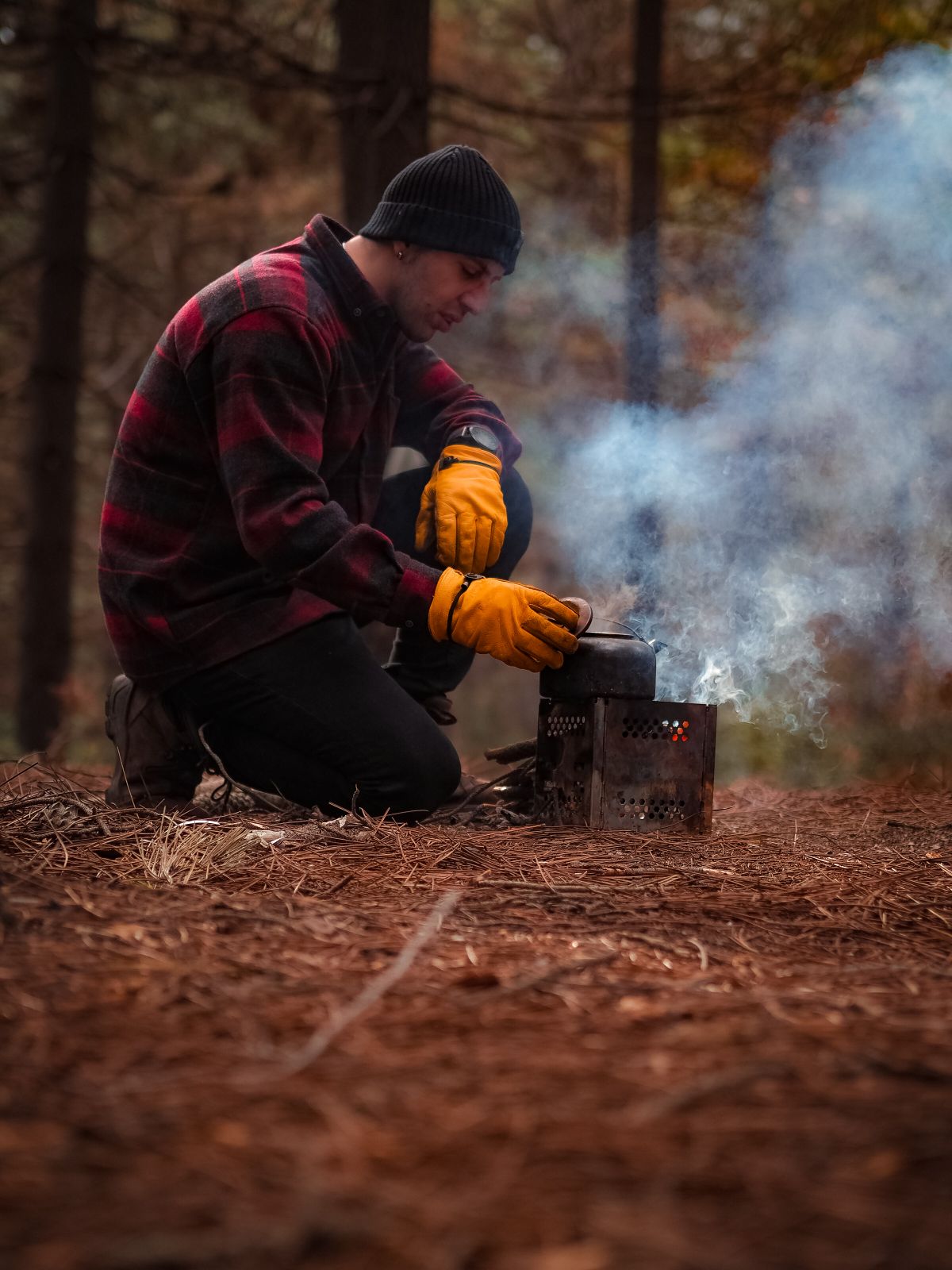
Camper preparing food in a forest campsite
Morning

Quick Start

Build breakfast around one warm item, one fast source of energy, and a simple drink. Oatmeal, eggs, fruit, bread, and camp coffee require little preparation or cleanup.

Midday

Low Effort

Keep lunch portable when the day includes hiking, paddling, or travel. Wraps, prepared salads, cured ingredients, and snack boxes reduce the need to reopen the full kitchen.

Evening

One-Pan Dinner

Combine a protein, vegetables, seasoning, and a simple grain or flatbread. One-pan meals use less fuel, simplify timing, and leave fewer dishes after dark.

Packing Checklist

Pack the Working Kit

Use this checklist as a flexible starting point. Adjust quantities, fuel, cookware, water capacity, and food storage according to your destination, group, weather, and trip duration.

Continue to Cleanup
Cooking Equipment

  • Portable stove or approved cooking system
  • Compatible fuel and secure fuel storage
  • Cook pot, frying pan, and fitted lid
  • Heat-safe grips or protective gloves
  • Wind protection suitable for the stove

Preparation Tools

  • Sharp kitchen knife with secure cover
  • Durable cutting board
  • Cooking spoon, tongs, and spatula
  • Compact seasoning and oil containers
  • Reusable cloths and paper towels

Serving Essentials

  • Plates or bowls for each camper
  • Reusable cups and insulated mugs
  • Forks, spoons, and personal utensils
  • Food storage containers with lids
  • Reusable water bottles

Food Storage

  • Cooler or insulated storage system
  • Ice packs or suitable cooling method
  • Sealed dry-food container
  • Clearly grouped meal ingredients
  • Wildlife-resistant storage where required

Water & Washing

  • Dedicated drinking-water container
  • Separate washing-water container
  • Biodegradable soap where permitted
  • Wash basin and rinse basin
  • Drying cloth or compact drying rack

Safety & Organization

  • First aid kit and burn-care supplies
  • Fire extinguisher or suitable alternative
  • Lantern or area light
  • Waste and recycling bags
  • Weatherproof storage bins
Portable outdoor stove and cookware cooling after use

Pack-Down Routine

Leave the Kitchen Ready

Clean as part of the cooking process rather than waiting until the end. A simple routine protects equipment, reduces odors, limits wildlife interest, and makes the next meal easier.

01

Scrape First

Remove food residue before adding water so washing requires less time and less soap.

02

Wash in Order

Begin with cups and utensils, then plates, cookware, and the greasiest items last.

03

Dry Completely

Allow equipment to dry before sealing it inside storage containers.

04

Secure the Site

Store food, waste, cookware, and scented items according to local campsite requirements.

Common Questions

Camp Kitchen FAQ

Practical answers for selecting, organizing, and maintaining a portable outdoor cooking setup.

What is the best location for a camp kitchen?
Choose a level, ventilated area away from tents, dry vegetation, overhanging branches, and busy walking routes. Follow all local fire restrictions and campground rules before using any stove or flame.
How much cookware should I bring?
Most trips can be handled with one pot, one pan, one cutting board, one knife, and a few multipurpose utensils. Add equipment only when the menu or group size genuinely requires it.
How should food be organized in a cooler?
Pack meals in sealed groups, keep temperature-sensitive food close to the coldest area, minimize empty space, and place frequently used items where they can be reached without leaving the lid open.
What meals work best for late arrivals?
Choose meals that are fully prepared or require only reheating. Soup, chili, wraps, pasta, and pre-cut one-pan ingredients reduce setup time when daylight and energy are limited.
How can I reduce cleanup at camp?
Prepare ingredients at home, use a small number of versatile tools, line storage containers carefully, clean during cooking, and select meals that can be prepared in a single pot or pan.
Should drinking water and washing water be separate?
Yes. Keep drinking water in a clearly identified container and use a separate supply for washing whenever possible. This prevents confusion and helps protect the clean drinking supply.

TrailPack Field Guide

Prepare Once. Enjoy Every Meal.

A thoughtful camp kitchen gives you more time to enjoy the campsite and less time searching, rearranging, or cleaning. Build around your real routine and keep every part of the system simple.